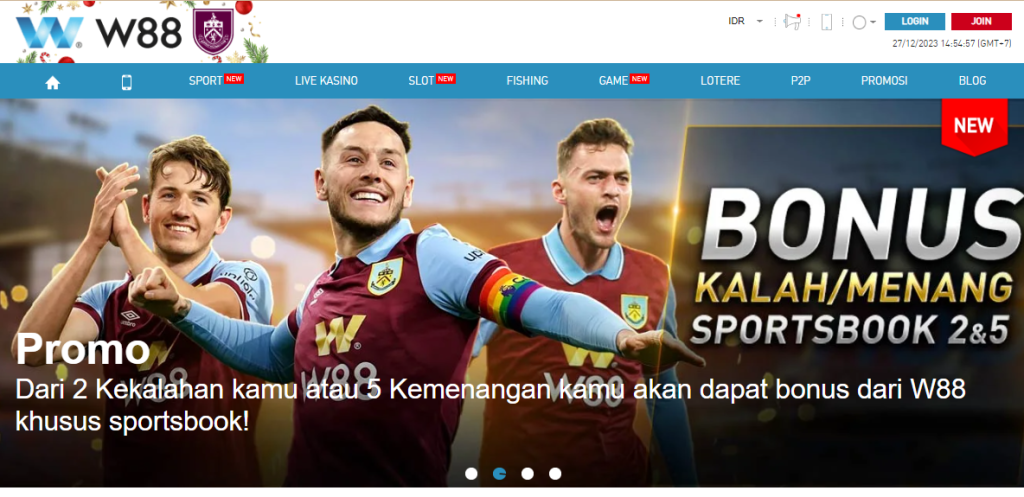
| Nama merek: |
W88 |
| Tahun didirikan: |
2013 |
| Pemilik: |
Marquee Holdings Limited |
| Unit perizinan: |
First Cagayan Leisure & Resort Corporation (CEZA) |
| Markas besar: |
Filipina |
| Link W88 terbaru 2024: |
W88 – W88.com – m.W88 – W88 link – link W88 |
| Link W88 login PC & Mobile: |
W88 login – login W88 – m W88 login – W88 Mobile |
| W88 link alternatif tanpa blokir: |
W888 – WW88 – W88 slot – W88 casino – W88 alternatif |
| Mitra sponsor sebelumnya: |
- Wolverhampton Wanderers (2018-2019)
- Leicester City (2018-2020)
- Aston Villa F.C (2019- 2020)
- Crystal Palace F.C (2020-2021)
- Argentina (2022)
- Fulham F.C (2022 – 2023)
|
| Mitra sponsor saat ini: |
Burnley FC (2023 – 2024) |
| Duta Merek W88: |
- Emile Heskey (2018)
- Brian Lara (2021)
|
| Permainan taruhan: |
- Taruhan olahraga
- Kasino online
- P2P
- Permainan slot
- Keno & Lotere
|
| Promosi W88: |
- Dapatkan Rp 50.000 taruhan gratis
- Hadiah spesial (kaos, topi, bola)
- Bonus selamat datang hingga 100%
- Pengembalian dana taruhan harian.
|
| Aplikasi seluler: |
Aplikasi W88 Seluler Android dan iOS |
| Cara pembayaran: |
- Transfer bank
- Gerbang pembayaran online
- Dompet elektronik (Neteller, Skrill)
- Transaksi melalui mata uang kripto
|
| Mata uang yang diterima: |
RMB, INR, IDR, KRW, MYR, THB, USD, VND |
| Dukungan bahasa: |
Mendukung 16 bahasa, termasuk bahasa Indonesia |
| Hubungi W88 Indonesia: |
|